
Two members of the Company, Morwena Carrington and Wendy Hardiman-Evans, relate their experiences of life during the pandemic.
Morwenna Carrington

Two years ago, Morwenna Carrington followed her father into the Cooks but by the end of 2019, the first whispers of what became Covid-19 started and she was in the thick of it.
Before the pandemic started, I was deputy director for Health Protection policy, which covers routine vaccines and immunisation programmes, the NHS screening programmes (including adult cancer screening) and policy on antimicrobial resistance and sepsis.
The team is part of the Emergency and Health Protection Directorate, which provides the department’s operational response for all types of emergencies, weather-related (flooding, snow, extreme heat or cold), terrorist-related (the London Bridge and Westminster attacks), supply chain issues (medicines), infectious disease outbreaks (e.g. Listeria in hospital sandwiches), or any other type of incident that could result in casualties or knock the smooth running of the NHS. All deputy directors within the directorate take turns to be senior on-call officer each week when we monitor our response mailbox and are available 24/7 for early alerting to, and handling of, any emerging incident.
Before Covid, our pandemic preparedness programme was largely focused on flu, identified as one of the highest risks on the National Risk Register maintained by the Civil Contingencies Secretariat in the Cabinet Office.
Early days
The first mention of Covid-19 came in a medical journal article at the end of December 2019 about an ‘undiagnosed viral pneumonia’ in Wuhan, China. By early January, authorities in China were reporting that the unidentified viral pneumonia was not Severe Acute Respiratory Syndrome (SARS), bird flu, or Middle East Respiratory Syndrome (MERS). A week later, the Foreign Office issued updated travel advice to China, Hong Kong, and Macao. On January 9, the World Health Organisation issued a statement confirming the identification of a novel coronavirus by the Chinese authorities, triggering significant coverage from the BBC, the FT, The Times and The Telegraph, as well as international media. On January 11, the first death from the novel coronavirus was confirmed by the Wuhan Municipal Health Commission.
In those early days, our focus was on convening the New and Emerging Respiratory Virus Threats Advisory Group (NERVTAG) to consider and advise officials on the risk posed and to prepare advice to people considering travel to China for the Chinese New Year.
On January 17, Imperial College published its first report on modelling of the novel coronavirus. It stated that:
“Many aspects of the COVID 19 outbreak are highly uncertain. However, the detection of three cases outside China is worrying. There are many unknowns, meaning the uncertainty range around this estimate goes from 190 cases to over 4000. But the magnitude of these numbers suggests that substantial human-to-human transmission cannot be ruled out. Heightened surveillance, prompt information-sharing and enhanced preparedness are recommended.”
The report triggered further coverage. On January 22, the Department issued the first public statement on the situation in Wuhan. This updated the enhanced monitoring to be put in place at airports, the clinical guidance that had been issued for the detection and diagnosis of the new coronavirus, and revealed that Public Health England had developed a diagnostic test, making the UK one of the first countries outside China to have a specific laboratory test for this disease. The next day the Health Secretary of State made his first statement to the House of Commons on the outbreak.
For the next month, we continued to focus on supporting the repatriation of British nationals from Wuhan and other affected areas and doing the preparatory work on what became the Coronavirus Act.
At the beginning of March, I was seconded into the Operational Response Centre as deputy Strategic Incident director, where I stayed until July. In that time, I supported returning British Nationals from affected cruise ships, which included one trip to meet passengers off the plane at MoD Boscombe Down and arranging for their self-isolation at the Solstice Holiday Inn. I was also responsible for establishing a dedicated Guidance Cell for the production of public-facing guidance and agreeing a new process for the recording and publishing of death data to ensure greater accuracy and alignment with the Office for National Statistics.
In June, I returned to my day job in the health protection unit, but also took over the Health Security portfolio to cover for my colleague who was working on social distancing policy. On my return to vaccines policy, I immediately identified the need to establish a dedicated team to start planning for vaccine deployment as soon as one was authorised (a separate vaccines taskforce was responsible for procuring the vaccines but we led on how the vaccine was actually going to be distributed and administered). This continued to be my primary focus for the next few months as an entire programme – and new team – needed to be set up from scratch.
At this stage, we had no idea which vaccine would be available first so had to plan for all eventualities, including a mixed economy model where a combination of vaccines was used (which has proved to be the case). This meant we had to plan for different types of storage and distribution (e.g. cold chain versus ambient storage), vaccines being produced in different formats (multi-use vials or pre-filled syringes), and a combination of different deployment models (surgeries, centralised vaccine hubs, and mobile units).
One thing we did know was that, in order to vaccinate as many people as possible as quickly as possible, we needed a much bigger workforce than we had available, which led to us amending legislation (the Human Medicines Regulations) to allow people other than qualified doctors to administer the vaccines. Further legislative changes added Covid-19 to the Vaccine Damage Payment Act to ensure that anyone seriously adversely affected by receiving the vaccine would be eligible for a payment, following the approach we had used for Swine ‘Flu in 2009/2010.
In August, the abolition of Public Health England was announced alongside the creation of its replacement – to be called the National Institute for Health Protection – and I led on the Department’s preparations in relation to health protection, health security and pandemic preparedness for the anticipated three-year funding settlement from the Treasury (the Spending Review), only for the review to be cancelled at the 11th hour, with annual funding rolled over for a further year.
Having taken over as Deputy Director for Health Security, I found myself also responsible for the department’s pre-covid pandemic preparedness, which was the subject of significant public and media interest, with a particular focus on a pandemic preparedness exercise that we had conducted in 2016 called Exercise Cygnus. This led to publication of the report from Exercise Cygnus in October. My team also took on policy responsibility for Sars-CoV-2 variants with the first significant variant of concern being the Danish ‘mink’ variant, which emerged in North Jutland, followed by the Kent variant in December, the South African variant of concern over Christmas and New Year, and the Brazilian variant in January.
Alongside the team’s focus on variants of concern, I found myself representing the Department of Health and Social Care at an inquest into the role that air pollution played in the death from asthma of a nine-year old girl from Lewisham in 2013. Having never set foot in a coroner’s court, I was apprehensive about being cross-examined by the Counsel acting for the family, particularly about matters which long pre-dated my experience of working in the department or being responsible for Environmental Health Protection policy. I dedicated several weekends to intense revision in the run-up to the inquest – hard work which paid off – so as to ensure that I was able to accurately represent the interests of the health and social care sector and provide some of the answers that the family was seeking.
The year concluded by publishing an updated National Risk Register in December with my team responsible for a case study on Covid-19 – a fitting end to a busy year.
Wendy Hardiman-Evans
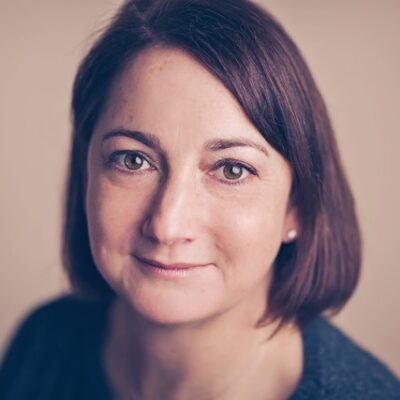
Wendy Hardiman-Evans, who joined the Freedom by Special Redemption two years ago, has provided a taste of the life experienced by many people in the company.
Married to David and living in East Horsley, Surrey, where in her spare time she used to enjoy skiing, travel, golf, gardening before things took a turn for the worse she writes: “It’s been a long winter, but for me, a winter of real appreciation – for my home and family, health and wellbeing, food and wine, friendships and community.
Like many, I have become at one with Zoom and managed to keep in contact with many friends and family in the UK and abroad. My village choir performed on Zoom with 22 other choirs from around the country in a fantastic ChoirShow which aired live on YouTube raising money for Anxiety UK.
As spring is finally just around the corner, I am enjoying the outdoors. I am blessed to live in the beautiful Surrey Hills where recently on a walk, I heard the calling of a majestic Red Kite overhead. I am busying myself in the garden and have planted a herb garden and some seeds for vegetables and cut flowers. To quote Audrey Hepburn, “To plant a garden, is to believe in tomorrow.” and that is certainly something I want to do.
With longer, sunnier days ahead, l hope that life will become easier for many, and for those who have relentlessly given their energies and time for others, will have time for themselves at last.


