
In April, an almighty Michelin Star sized spanner was thrown into the works at Innholders Hall when Herbert Berger announced his retirement as he approached the tender age of 70. What’s Cooking caught up with him to reflect on his illustrious career…
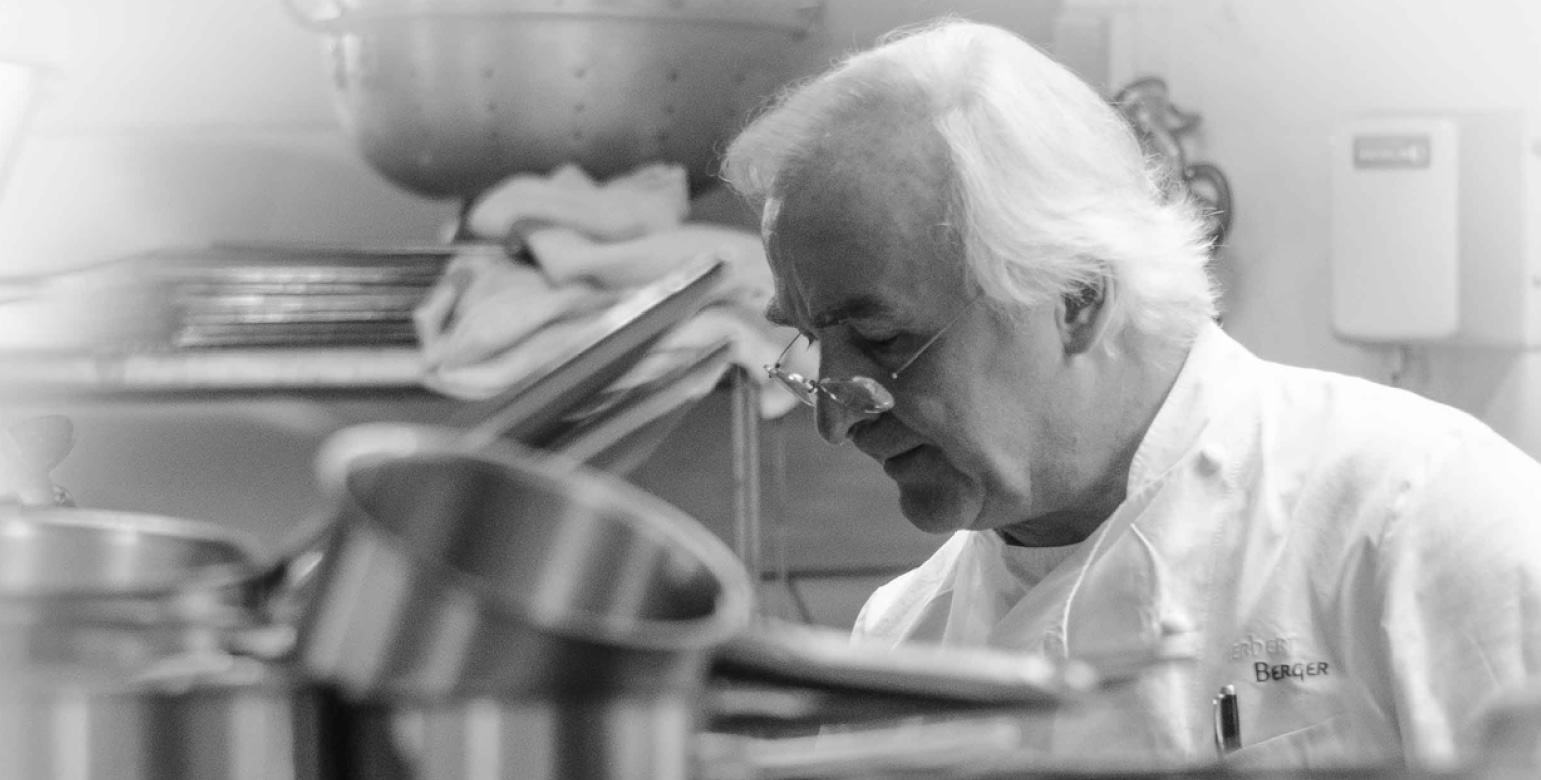
WC: Please tell us about your childhood and early years
HB: I grew up on a farm in a small village in Austria.
Ours was a simple, humble life and we were quite self-sufficient. I remember being surrounded by forests, lakes, lots of gardens, and our little farm was home to goats, pigs’ chickens, and a sheep. The wool from the sheep produced jumpers for all the family which my mother knitted. I don’t think I appreciated it fully at the time, but everything was home grown, homemade and fresh.
And we shared with neighbours – we swapped goats milk for their cows’ milk to make chocolate that I would actually drink, and we had delicious homemade butter; we swapped excess vegetables of one kind for their excess of another.
I helped on the farm, feeding the animals, milking the goats, collecting eggs, and making hay in summer to feed the animals in winter. When the pig was slaughtered, we were told, categorically, to disappear so that we did not witness the act; but I remember clearly being called back afterwards, to stir a pot of pig’s blood in the snow so it wouldn’t coagulate. My mum then made the most fantastic black pudding in the pig’s intestines which my father washed out in the fast-flowing mountain river next to the farm. Any excess fat went to the chemist and a few weeks later we received washing soap bars!
My Dad was a good cook, but in those days, women did all the cooking, preserving, and baking. In fact, my mum was the most influential person in my life – she was a wonderful cook – specialising in simple, honest food. We would forage as much as we could, collecting wild mushrooms, picking delicious wild strawberries from the mountains and fresh dandelions for salad, as well as fishing for wild trout in the mountain rivers.
When I compare kids today, spending their lives playing on their phones or gaming, my childhood was idyllic – we played out all day – making campfires, cooking the fish we caught and baking potatoes in the hot ashes. We came back exhausted but having had enormous fun.
I was born in ’53 and growing up as a teenager in the 60s was interesting! I have a sister, five years older than me. She was heavily into the music of the time and moved away from home to live in Salzburg. It was all terribly exciting. Even though my homelife was wonderful and the setting beautiful, I was desperate to follow in my sister’s footsteps and ‘see the world’.
By the late 60s, it was all too fascinating, and I was intent on doing something different, but at the same time, I loved cooking and knew I wanted to be a Chef. All my friends wanted to either go to higher education or become plumbers or engineers. I was the only one who wanted to be a Chef and I stuck to it.
WC: How did this childhood desire to be a Chef kickstart your renowned career?
HB: I started at the Grand Hotel Zell am See in Austria, on a classic apprenticeship. It was a very good, privately run hotel, in a beautiful setting by a lake and a mountain. The apprenticeship was three years, with 10 months at the hotel and 2 months block release, boarding at Catering College in Salzburg. During this time, I learned so much and made many friends who were chefs and waiters – both equally recognised professionally in Austria.
I then had a yearning to travel and moved to Switzerland doing seasonal work, I had a great time particularly in the winter season as I am a passionate skier! It was also a fantastic training ground with influences from all over the world. At 11.00 AM the chefs all had lunch which was prepared by different chefs and meant we experienced all sorts of cuisine including English, German, Italian, and French.
I was working in 5-star hotels in Switzerland and thinking I was working among the best in the world. Then one day, I happened to pick up a tabloid which had a headline ‘Best Chefs’ in France’ and I read pages about a Chef called Paul Bocuse. It then dawned on me that I had not even scratched the surface and had a long way to go. It did, however, inspire me to keep learning and searching for the best. I was working on the principle the higher you climb the more horizon you have.
That summer I decided to have a bit of fun and planned to spend the season in Jersey with a friend. As luck would have it, he fell in love and stayed home; so I went off on my own and, while it wasn’t the best experience for culinary development (there were more parties than cooking!), it did provide a gateway to the UK.
I was supposed to be heading back to Switzerland at the end of the season, but on the way back stopped off in London, loved it, and decided to stay.
I needed to find work, so I went to an agency, explained I was a cook looking for a job. They took one look at my CV and declared “You’re not a cook, you are a Chef”. Of course, in Switzerland a Chef is a manager! Luckily, I found work immediately, did one more season in Austria and moved permanently to London in ‘76. I kept working, learning, buying books and got into a new wave of cooking – Nouvelle Cuisine. Looking back on that style of cooking today, it was essentially classic cooking done in a lighter, fresher way – but it became gimmicky, even silly.
By then, I was working at Fredericks in Camden Passage – an area in the heart of Islington which, at the time, was becoming something of a gastronomic centre, thanks to the likes of Robert Carrier and others. In 1979, I joined Le Connoisseur in Golders Green where I gained my first Michelin Star and, at a time when hardly anyone knew about Michelin Stars, I got a tiny paragraph of recognition in the Evening Standard!
My style of food then was classical with influences from Nouvelle Cuisine. The recipes were classical but with lighter, fresher, better sauces and I always tried to buy good ingredients – but I suppose I had lost that connection with nature of my childhood. So, when I saw that French guy riding along with onions round his neck – I bought from him. What I never lost was the need to focus on taste – my mother was so precise on flavour and seasoning, she knew exactly what food needed – salt, pepper, wine, herbs, and spices – and to this day, a very clean, depth of flavour is totally important to me – instilled from my mother!
After Le Connoisseur, I moved to a restaurant in Hampstead called Keats – well known for gastro evenings with clientele ranging from the Inventor of the Muppets to John Cleese, and world-famous pianists and musicians. It was a short stay – the only time in my career that I found it impossible to work with someone. We always needed help and an old friend, Mario Lesnik, had come over one evening to lend a hand. He said I was wasting my time
and suggested I went to work with him at the Connaught Hotel under the legendary Michel Bourdin. I didn’t need asking twice!
It was like going from Head Chef to being an apprentice all over again. The Connaught was a big kitchen, with a very hierarchical brigade and with 2 stars under his belt already, Chef Michel Bourdin produced exquisite cooking on an entirely different level.

WC: Must’ve been a tough gig there, how did you cope?
HB: I loved it, I worked hard, learned a huge amount – a new depth of cooking, different scale, and innovative techniques; there were strong connections with France. It was an incredible 5-year stint, and I went from Chef Saucier to Sous Chef by the time I left, following Lesnik to Claridge’s as Senior Sous where we worked together to refashion an outdated product to great acclaim.
Of course, Bourdin was the founder of one of the Worshipful Company of Cook’s valued partners – The Academy of Culinary Arts and remained heavily involved in it during his lifetime, so we owe him a great deal.
Chef Herbert benefited from various Stages in France spending time at Maxim’s, Hotel Ritz in Paris, Hotel Bristol in Paris, Rubuchon’s Restaurant Jamin and Troisgros in Roanne – which helped influence the changes he was to introduce with Lesnik at Claridge’s and provided exposure to working in 2/3 star establishments, as well as countryside restaurants using fresh produce brought in directly from farmers and fishermen, where everyone had Menu du Jour. It was an inspirational learning experience. After 18 months at Claridge’s the position of Head Chef at Mirabelle beckoned…
HB: This was my first big role as Exec Chef. The restaurant needed a revival. I started to apply everything I knew and quickly acquired a Red M from Michelin, things seemed to be going well, we had a major increase in turnover, our reputation was growing, and we were getting great reviews; then Black Monday hit and the owner lost money and sold Mirabelle.
At this point, I teamed up with my friend Richard, and together we raised funds, formed our own company Berger & Sawyer, and bought Keats. We completely refurbished the site and opened in ’89. We built up the business and its reputation, but it was very tough opening in the middle of a huge recession and, to be honest, we struggled and would’ve probably gone under if we hadn’t then merged with Roy Ackerman’s Restaurant Partnership. We still achieved a Red M in the first year of operation and were being assessed for a Michelin Star, but the Restaurant Partnership merger happened, and the star never materialised.
The most important thing is to learn from mistakes, I never regret the decision to open Keats, even though looking back we were a bit naïve. After all, we were just two young chefs from the West End, a bit posh, a bit pretentious perhaps, opening a fine dining restaurant in Hampstead in the depths of a recession, with little business experience – not the best recipe for success!
WC: So, what happened next?
HB: Well in Feb ’92, I went to the Café Royal as Exec Chef. Many of my contemporaries were ringing alarm bells and saying, “You are MAD to take on the Café Royal, a monster operation with its reputation of strict control by the Forte Empire” But actually, I was promised and got carte blanche. Everything was on its knees and my job was to turn it around. It was a massive operation, 21 banquet rooms – the largest seating 700 and several with a 2-300 capacity, I had the Penthouse, the Cellar, a big Brasserie, a wine bar, and the famous Grill Room – so opulent and OTT, it was only topped by the Ritz! I went in hard, revamped the team, brought in good people I knew, and made lots of changes. Our team met every morning, we went through menus, bookings, and I took personal charge of the Grill Room. Against all the odds, we won a Michelin Star. This changed everything – it gave me freedom, I introduced a new buying policy and, drawing on my childhood experiences, brought everything back to good quality, fresh, simple ingredients, prepared, cooked and served consistently well. It impacted the whole set up, business improved by 60% after the star and it was hugely rewarding to see these positive changes.
Then Granada took over Forte in a hostile takeover and, while Granada asked me to stay on, they wanted to introduce a production kitchen off site, and we parted company. The whole Forte family have all been amazingly supportive and I treasure my time at the Café Royal.
WC: You said every cloud has a silver lining…
HB: Indeed, and through a friend, I found out about an exciting new venture in the City with Jessen & Co. They wanted to start a fine dining room in the City, serving European Brasserie style food. We met up, got on famously, found we were at one with our ideas and I became a partner and small shareholder in 1 Lombard Street. After two years, we were awarded a Michelin Star – the first to be given in the Square Mile – and were generally considered to be the best restaurant in the City of London. It was a tough gig though, 70/80 staff, breakfast, lunch, and dinner, serving up to 600 guests a day. I was a partner, the Chef and GM, it was a tremendous time, and I enjoyed the business aspect of it, I always believed there was no point in cooking if you don’t make it financially successful, I loved that challenge. However, after 10 years, I was thinking, I can’t do this forever and wanted my own business.

I had joined the Gastronomes and, at one dinner, sat next to Dougal Bulger, then Clerk of the Worshipful Company of Innholders, who said that they were thinking of outsourcing their catering. We had coffee and a few chats, but I heard nothing more until, about a year later, I bumped into Dougal at yet another Gastronome dinner who said they were now actively looking for a change.
I was looking for a change too, so I rushed home, worked hard, and submitted my tender… there was a beauty parade, and to my delight, I won. The rest, as they say, is history.
I formed my own company, took over all the catering aspects at Innholders Hall and turned it into a highly successful culinary operation within a few months. I was lucky, I had my full trusted team with me, and we exceeded all expectations. It has been a purely magical time. I have simply loved every aspect of working here.
WC: What an amazing story, and we at the Cooks have enjoyed many a banquet prepared by you, which brings me to ask, when did you join the freedom and why the Cooks (dumb question, but hey, someone must ask it!)
HB: I joined the Freedom in July 2015 and became a Liveryman during the pandemic in 2020 and joining the Cooks is obvious, it’s my profession. I knew people already in the Company – Bev Puxley, Sara Jayne Stanes, and others. I saw it as a special recognition and extremely worthwhile. While the Company has its rituals and traditions, it is forward thinking with its programmes, apprenticeships, and support of industry-linked charitable causes. Very few people get asked so I consider it an honour. In my working life I didn’t seek celebrity – I just wanted to be in the kitchen. Now retirement fast approaches, it is time for me to get more involved. Our profession is in desperate need of improvements, and I want to devote time to this.
WC: So… why hang up your Whites now?
HB: several reasons really. I reached 70 in April, and, on 15th July, I will have completed 55 years – a long working life by anyone’s standards. I now want to enjoy life doing other things…It is getting more and more difficult to attract the right number of staff at the right level and it is hard to maintain quality if you don’t have the staff to do it. I am still working 12-14 hours a day which makes it impossible to enjoy other interests and hobbies. My other half also has a business in the New Forest and trying to divide time is challenging. The pandemic had an influence too – hospitality was devastated, there were financial challenges, and we [the industry] lost a huge amount of money. Covid changed the way people work, changed their attitude to life – this adds to the difficulty of attracting staff as people now want more from their lives. Sadly, the burn out in our industry is awful – that’s why we need organisations like The Burnt Chef. The whole staffing problem seems to be worse now than ever before. Which is sad as it’s a fabulous profession.

WC: What does retirement hold for you?
HB: Skiing is big on the agenda! I love wild food, so shooting and foraging. Obviously, enjoying drinking wine (without having to worry about getting up for work next day), then I will be enjoying myself, travelling, eating out, going to art galleries, walking our dog.
WC: and your art influences?
HB: I’m very open minded – Gustav Klimt is magical, Kandinsky, Marc Chagall, George Braque, Hockney, Rothko, impressionists – Miro, Monet… I am a bit of a collector myself, which is a nice thing to do…
WC: and you mentioned dog walking…
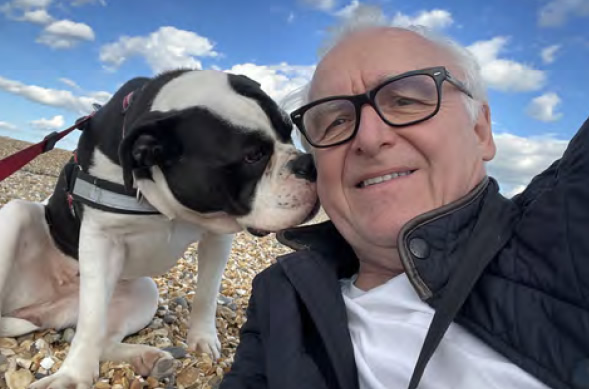
HB: Hayley, my other half, had a boxer which sadly died last year. We now just have an Old Tyme English bulldog – as stubborn as can be – who is delightful and very pretty, but a walk takes a long time because everyone stops to say hello!
WC: And now ‘the favourites’ questions… sport, film, band/musician, book…
HB: Skiing is my sport – I love it, so I plan lots of skiing; I don’t have a favourite film as such, but I suppose cult films leave the biggest impression, the Godfather, Precinct 13, Straw Dogs, Duel, Le Grand Bouffe… and the odd spaghetti western!
My favourite bands are the Rolling Stones, Queen, Fleetwood Mac, Pink Floyd, Tina Turner, and I also love classical – Mozart, Beethoven, and the cello – Haydn Cello Concerto, Jacqueline du Pre playing Elgar’s Cello Concerto.
I confess to being not well read, it’s hard to read when you’re tired – something else to catch up on in retirement, but I love a John le Carre spy novel or Dick Francis.
ED: We reminisced that we both lived (at separate times) round the corner from each other in Islington, close to the school where Pink Floyd recorded the video for Another Brick in the Wall, indeed Herbert then had a girlfriend who worked at the school).
WC: Something we don’t know about Herbert Berger please…
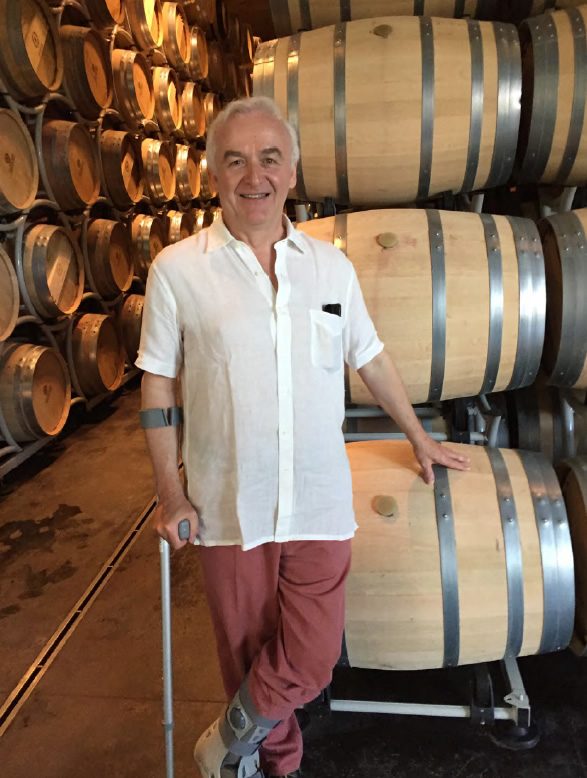
HB: I have a bionic ankle! Yes, six years ago I had an artificial ankle which changed my life.
WC: Tell me something funny…
HB: I prefer to listen to other people tell jokes, but here goes! When I was just starting out at the tender age of 15, Chefs used to do terrible things to young apprentices, and we dare not question it. Of course, nowadays, Chefs can’t play tricks because it’s not considered PC.
Anyway, one day, as a young apprentice, I was hauled in front of the Head Chef and told to stuff chives for a special soup night. He gave me some cheesy cream and a tiny piping bag. I looked at the bag and looked at the chives and thought ‘this is strange, but Chef has told me to do it, so I’ll give it a go’. The chives were closed at one end, and it was impossible to get the filling in, so I asked the Chef if it was OK to snip off the closed end. He nodded and they all watched as I snipped off the ends of each chive and carefully tried to stuff them all, until I realised, they were all wetting themselves with laughter!
WC: The biggest challenge you overcame?
HB: Oh, this was while working at Claridge’s, when we had to go to the National Gallery in Washington for the Great Treasures of Great Britain Exhibition – The Savoy Group were invited to provide for a huge canape reception for 1500 people on opening night and I was chosen to lead the team. This was an immense operation and needed meticulous planning. We knew it was 3 full days of work once we got there. However, on arrival, we discovered that we could not get access to the preparation kitchen (which was a long way from the gallery) for one and a half days. As chefs, we just thought, we must get things done and do our work in half the time. I went to the Gallery the night before the event to check on the equipment. Everything was fine, plenty of ovens and fridges, tables and so on. Next day, we arrived at 4.00, walked in, and all the equipment had gone except for a couple of domestic ovens. The previous caterers had taken the rest away. There was no time to do anything else and, with so much security, there was no chance of getting anything else in. It was a nightmare. We had a very quick rethink, worked all night, used the domestic ovens and a few microwaves, and served the rest cold. We were completely exhausted, had worked for 36 hours solid and then they brought cameras in and expected a smile!
WC: Finally, what advice would you give to budding young chefs – particularly the Cooks’ Apprentices?
HB: Work hard, have a good attitude, don’t run before you can walk, master the basics. It’s a long career and if you don’t build a strong foundation, then you won’t last. Experiment with all styles of cooking and have fun.
WC: Thank you so much for sharing the compelling story of your life and career. We wish you a happy, active, and long retirement and congratulations on all your impressive achievements.


