This year’s Exercise-Army Sustainer was held at the Prince William of Gloucester Barracks in Grantham over a week, culminating in the finale on Saturday 13 May. It was a fascinating insight into the challenges the army culinary teams face providing food for the infantry when out in the field or on exercise. The Ex-Army Sustainer is the brainchild of – to give him his official title – Freeman Honorary Colonel Harry Lomas MBE BEM RLC. What’s Cooking spoke to Harry (as he prefers to be called) shortly after the event to find out more about the competition, how it came about and why it is so important.

WC: Tell me more about the origins of the Ex-Army Sustainer?
HL: There were a number of reasons it came about. But first, you need to understand that there are two strands of the army – the regular army and the reserves. As far as the culinary team was concerned, we wanted to bring the two elements closer together. We were facing a downturn in the number of chefs in the regular army and were relying more and more on the reserves. We needed both teams to be equipped to be able to provide appealing, healthy food to ensure the army is well nourished. Feeding is the most important part of any army – because there is a well-known saying that an army marches on its stomach, a saying that is true. We need to make sure that the army is fed and watered well as it is such an important part of the moral fighting fibre.
When we go into operations, we use regular and reserve chefs alongside personnel from partner countries, so it is important that they are able to gel and work well together in what can sometimes be difficult working conditions. They also get to know the people, the food they eat and there is an important cross-pollination of diplomatic relations.
Finally, it’s about building the ability to excel in improvised cookery. The event is about training chefs to use improvised field equipment when we don’t have the luxury of a kitchen. During the Falklands war, the ship carrying all the catering equipment and supplies sank and none of the field equipment was recovered. The catering team had to be resourceful with whatever they could find to create catering ‘ovens’ to prepare and cook food for the soldiers. They made use of dustbin lids, metal canisters, dug holes in the ground, used straw and gathered twigs and wood and managed to feed a whole army.
The Ex-Army Sustainer is the only event that uses improvised cooking – and these aspects of the competition are the most spectacular.
WC: Is this sort of approach used by other countries?
HL: I would say we are the leaders. When we go on exercise, our chefs put on buffets, cater for meetings, and other events or celebrations and invite officers from other armies. They love to see what the Brits are doing as we are seen as being at the cutting edge of producing complex dishes in stretching circumstances. I would also say that the Americans invest in better equipment; the Brits invest in better training. Going back to my Falklands example, the Americans would not have had the skill set to prepare food in the situation we were in. The Brits are trained to produce food anywhere, in whatever circumstances they find themselves in.

WC: We were enthralled by the activities going on in the improvised challenges outdoors, what was happening there?
HL: Competitors in these classes were tasked to show their expertise across various categories from field cooking and improvised techniques to intricate dessert presentations and innovative street food; from the inventive use of sustainable fish to the elegant decoration of celebration cakes.
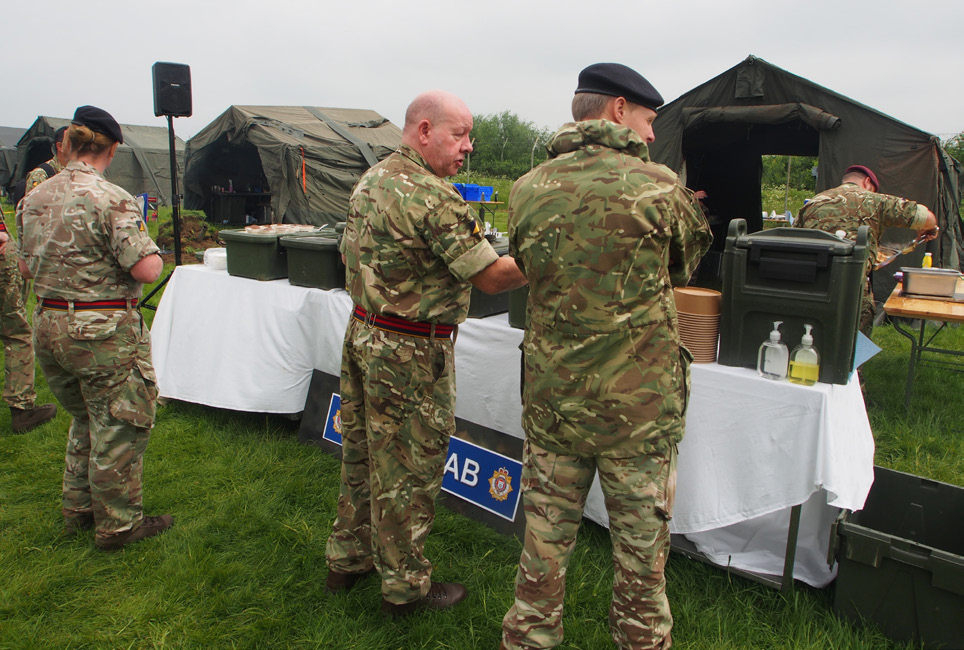
All the improvised classes are timed events. The Open Skill Field Challenge is designed to test the culinary skills and adaptability of a team of three military chefs in a simulated operational environment, with teams charged with serving 20 personnel a two-course meal using limited resources and equipment. They have to demonstrate their ability to create nutritious and appealing meals within the constraints and conditions they may encounter in the field, highlighting creativity, efficiency, and teamwork.
The Open Skills Improvised Challenge tests similar skills among a team of three chefs but using unexpected ingredients and improvised methods and equipment. This challenges the chefs’ abilities to quickly adapt to what they have in front of them, think on their feet, showcase their ingenuity and skill and create nutritious and satisfying meals in unpredictable conditions.


WC: We managed to sample some of the food produced and it was impressive. Were they also expected to accommodate dietary requirements too?
HL: Yes, as well as producing the dishes they have to adhere to strict hygiene rules, be mindful of the dietary needs or allergies of those they are serving, their carbon footprint, wastage, costings and teamwork.


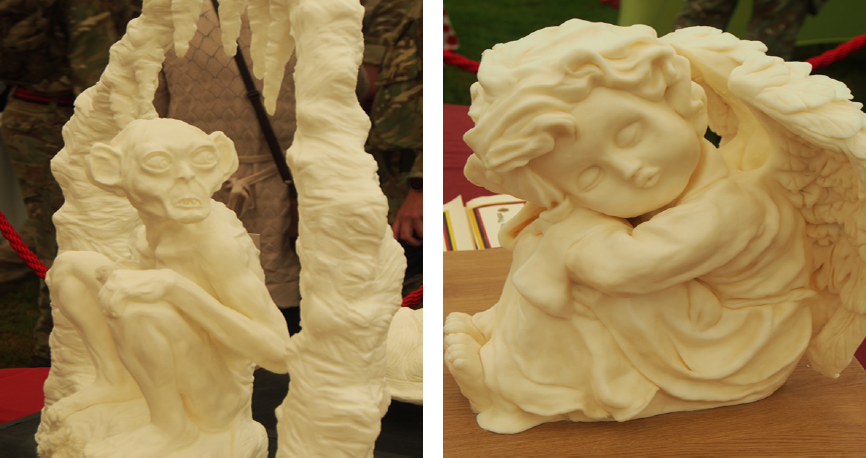
WC: Moving inside, there was a whole lot of activity going on, from supplier displays, competitions in an array of side kitchens and a splendid display of celebration cakes and carvings. The latter we found intriguing – why is it necessary for army chefs to develop these skills?
HL: The static displays are an important part of the event. Our chefs serve in the army for a period of time, but one day they will leave the army and come out to work in ‘civvy street’. It’s important at this stage that their skills are up to date. As well as that, the carvings or celebration cakes or elaborate desserts form centrepieces in buffets for gatherings of officers, international visitors, or other significant events. It’s also important because the army needs to attract talent and when looking for new recruits we need to demonstrate that we develop higher level skills and that they have the opportunity to develop them.
Most importantly though are those times when, on operations, we have a birthday or anniversary to celebrate. It is great for morale when people think everyone has forgotten about their birthday and suddenly a superbly decorated special cake is produced. It is amazing what a difference this can make to an individual who is missing their loved ones at home.
The Gurkhas do the majority of the carvings – and the artistic intricacy and skills on show are impressive.

WC: We watched many classes in the side kitchens, using varied ingredients and techniques. What were these all about?
HL: All of these competitions are the showcase of the year for these chefs to demonstrate what they can do. The competitions cover junior, senior, and open levels over a range of food types or specific skills. For example, the junior competitions focus on foundation culinary skills, knife techniques and presentation; the open competitions cover, respectively, poultry, pasta, hot desserts, fish, and vegan with different classes focusing on specific aspects such as sustainability, dishes suitable for fine dining or street food, and use of starches, sauces, and garnishes. Finally, there are the Junior and Senior Chef of the Year competitions.
This year’s competition saw some outstanding food produced and the 50 or so judges were impressed by all of the competitors.
WC: What support do the Worshipful Company of Cooks Give?
HL: The Cooks are big supporters and provide £2,000 for prizes and specifically sponsor the Open Skills Improvised Challenge and the Open Skills Field Challenge. The Master attends the event and presents the prizes for these competitions. The other competitions are sponsored by suppliers to the military who also provide equipment. They like to showcase their products and provide support for the army.
WC: The Ex-Army Sustainer was a triumph and we were privileged to see it all in action, you must be proud of what’s been achieved so far. But tell us more about your role as Colonel, because this is a voluntary position and you also have a fairly busy day job.
HL: I am honoured to have been appointed the Honorary Colonel of the 167 Support Regiment Royal Logistical Corps. The role is really what you make it. It is a renewable five-year term and is a position that I was nominated for, but then had to be approved by the late Queen.
I invest on average about one day a month and, as well as organising the Ex-Army Sustainer, I am passionate about attracting new talent to join the army or reservists. I go into schools and colleges all over the country to talk about the opportunities – we set up a tent and engage with schools and the general public to show what we do – it is a subtle recruitment exercise.
I am also keen to help those leaving the army or in the reserves find work – I can use my extensive contacts in industry to put them in touch with opportunities. I am on hand to give advice if they want it. I also get involved in organising training, running advanced and mandatory training, and get involved in deployment. It is a busy regiment in Grantham and keeps you on your toes.
WC: You left the army after 34 years having started as a Lance Corporal in Catterick, moving through the grades from Warrant Officer, to Captain, to Chief of Staff. Your final role was responsibility for the operational feeding of troops in Afghanistan. What has happened in your career since then?
HL: My first role out of the Army was as Catering, Cleaning and Waste Manager for the London 2012 Olympics, based at ExCeL. I then took up a role as Exec Chef at The Grove in Hertfordshire, before moving to my current role in 2018 as Head of Culinary for Delaware North at Wembley Stadium. Delaware North is a great company to work for, very people focused, and everything we do is about getting the best out of our teams. The aim is to produce the best food and hospitality at Wembley Stadium whether that be for football fans, concert goers, members or supporters. It can be a busy role and we can go from a core staff of a couple of hundred to several thousand on match or concert days.
It is clearly a role that plays to Harry’s strengths, but What’s Cooking was left wondering how Harry manages to fit his day job, alongside his role as Colonel of the Regiment and his commitments to all of the associations, charities and competitions he also gets involved in. We salute you Col Harry!