
To say that hospital chefs and their kitchen brigades are important to the health and wellbeing of patients would be a gross understatement. The 2020 Independent Review of NHS Hospital Food found that mealtimes can be one of the few highlights of their day and being given a wellpresented, tasty, and nutritious plate of food can improve a patient’s chances of getting better and can certainly improve their mental health and wellbeing. What’s more, there was clear scientific evidence about the beneficial role that food plays in both the prevention and treatment of diseases and its importance to health. This has led to a growing shift towards food being an integral part of a patient’s care plan, alongside medication and other therapies. A trend that NHS England is committed to accelerating.
Nowadays, the hospital Chef must manage a growing number of complexities including a staggering array of dietary needs critical to patient health. This includes acute awareness and understanding of allergens, cultural or religious dietary restrictions, waste reduction, food safety, portion size (relevant to each patient’s needs), cost, carbon footprint, and most importantly taste, texture, aroma, and attractiveness of the food presented. The skills required are many; and upskilling; training and development are at the forefront of many Hospital Trusts’ agendas and a big part of the work within NHS England led by the inspirational Phil Shelley.

What’s Cooking spoke to Phil about the impact of the 2020 Review and the role the NHS Chef of the Year competition plays in recognising excellence within the hospital Chefs’ profession and improving standards throughout the sector.
In 2019, during an outbreak of listeriosis, seven NHS patients tragically died after eating sandwiches contaminated with Listeria monocytogenes. The then Health Secretary, Matt Hancock, announced a detailed review of the safety, nutrition, quality, and production methods of food served and sold in NHS hospitals to patients, staff and visitors. The review published its findings in late 2020 and made eight important recommendations – one of which focused on raising the profile of the workforce and the credibility of the sector to not only attract the right talent, but also to celebrate success. One important element of this was the NHS Chef of the Year Award.
From the outset, Phil’s ambition was to drive the competition forward as an annual recognition of best practice in the sector and, although facing resistance from some quarters – most notably comms – to start off announcing its status as ‘annual’, Phil’s belief has paid off with people and organisations clamouring to be part of it.
With year four completed and year five well in progress, the competition is widely acknowledged throughout NHS England. Phil is quick to recognise that linking to the wider industry and gaining support from the Worshipful Company of Cooks and the Craft Guild of Chefs, along with a host of suppliers and industry partners, gives credibility and kudos.
The competition is open to teams of two and takes the format of regional events held in five English regions during July and August. In 2024, nearly 90 chefs entered – which shows how the competition has grown in stature from year one, when 18 competitors took part. Entries community and mental health hospitals.
The criteria for the heats reflected the depths of complexity that the modern-day hospital caterer must consider, and the judges’ task of analysing entries against such demanding challenges was no mean feat. Nevertheless, the successful finalists were announced and progressed to the next stage.
The winners attend a three-day mentoring event at the premises of Parts Town UK in Cannock in September. The value of the mentoring session is immense. Each came from large Foundation Trusts as well as small Independent Hospitals, from acute hospitals as well as team is matched with mentors drawn from suppliers and providers including industry giants Bidfood, Compass and Hit Training.
On arrival, there is inevitably some apprehension, with competitor chefs clearly wondering what is going to happen and asking themselves what on earth they are doing here, dreading the possibility that they would be sitting listening to endless people talk! But the event is not like that at all, and the judges see an overnight change with the chefs as they benefit from interactive workshops, high profile inspirational industry speakers, quality mentoring time, and most important of all, preparation time for the final challenge in October.
The final takes place over a testing five days and, in 2024, was held at the Grand Hotel in York. Each day the teams face different challenges designed to test their skills, knowledge and creativity. These tasks included recreating a recipe from the NHS national bank, which results in eight teams, using eight ingredients from a set recipe, producing eight different outcomes! This is important for the chefs to experience as consistency is an on-going challenge in the health sector. The finals also included a carbon-based plant forward challenge, tested their ability to accommodate allergen-free dishes and produce lowresidue foods. Finalists also had to demonstrate how they might cater for the nutritional requirements of children and most hospital patients aged 60 plus. Day three focused on children’s nutrition and included a special Torque D’Or challenge from partners Nestle Professional.
The teams are in play for three days and then, on day four, the final hots up, and teams start to get eliminated and sent home – in the style of TV’s MasterChef – The Professionals until day five, when only four teams remain. The competition itself gets more intense as the last four must create their dishes for 80 guests each day.

On the final day, the competition judges Nick Vadis, chef ambassador to the NHS Supply chain and Tim Radcliffe, net zero food programme manager, NHS England, were joined by guest head judge Lisa Goodwin-Allen, Executive Chef at Northcote. The score slates are wiped clean and previous results count for nothing. In the final cook off, there is everything to play for as the top teams create and produce a full four course menu, comprising an energy dense starter, main course, plant-based main course and dessert, with each course lower in carbon compared to the norm. All the dishes had to be created on an NHS budget to restaurant standard while catering for diverse dietary needs.
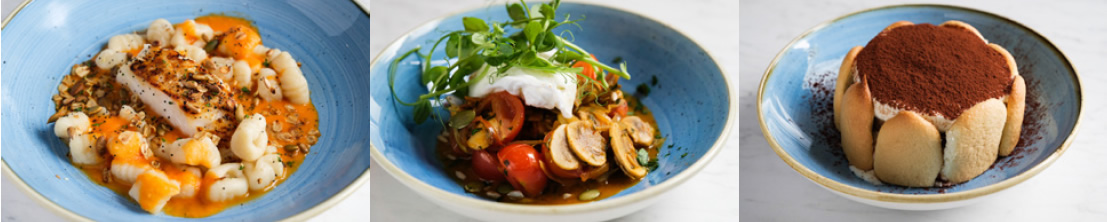
It was a closely fought contest, with hardly anything separating the three runners up, but the judges agreed there was one outstanding winning team from the Royal Surrey NHS Foundation Trust, Alejandro Hernandez and Manuela Miccoli who triumphed with a winning menu of venison bao bun starter, serve d with blackberry BBQ sauce and a celeriac and apple slaw; gnocchi with hake, granola and cherry tomato sauce; lentil patty, roast potato, celeriac fondant and mushroom gravy; followed by a classic tiramisu.

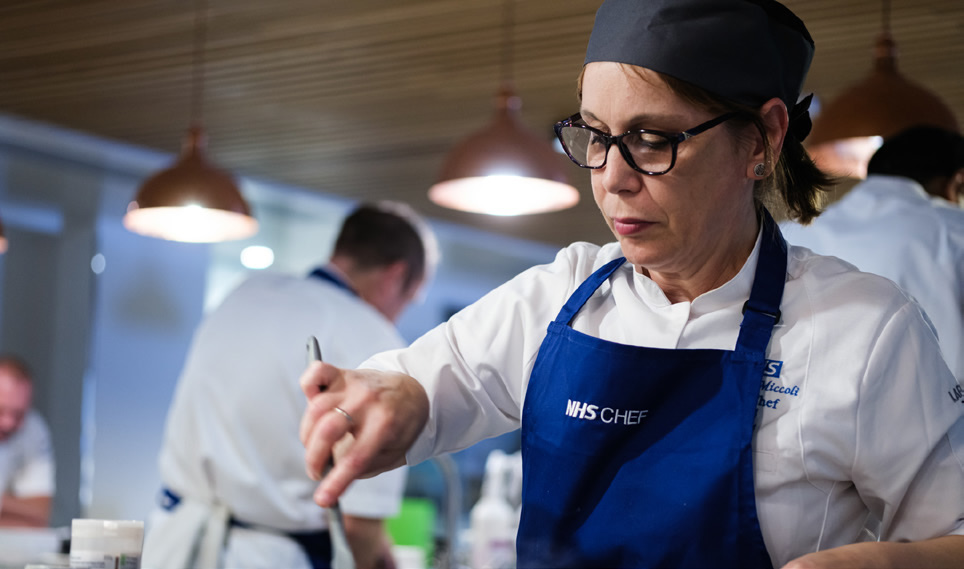

The fact that Russell Blake, Head of Healthcare, from the winner’s employer Medirest, was present for three days of the finals, demonstrates the importance of this competition to the sector and Phil is clear on the impact that it is having. He commented:
“NHS Chef provides practical experience for hospital chefs alongside mentoring and peer networking through which chefs gain knowledge, confidence and the opportunity to enhance and ultimately showcase their skills. We are continually reviewing the challenges, responding to ever more demanding complexities whether that be dietary and allergen awareness, cost, portion size, or carbon related. Every hospital trust has got a carbon target, and chefs might not be aware of their contribution to this. The competition is designed to highlight the challenge and help them get ahead of the game.
“Portion size and nutritional density is an increasingly important consideration. Most hospitals tend to give patients medium-sized portions, but people’s needs are not the same. Chefs need to be thinking about the bigger picture and what food patients, visitors and staff are receiving during the day and night – and that there is suitable provision for both children and older people. This includes provision of nutritionally dense foods, smaller portions and nutritional snacks.”

The success of the competition has not gone unnoticed with the NHS England’s Head of Profession for Estates & Facilities, Simon Corben, describing it as the highlight of the year and Phil is confident that the legacy of NHS Chef of the Year will continue to be a force for good. Already the competition has produced a national recipe food bank of high quality, tried and tested, fully costed, nutritionally analysed, low carbon, free to use, nutritionally sound recipes. It has recognised 15 catering exemplar sites and hopes these will help struggling hospitals to close the gap and improve standards across the board.
Finally, one of the goals was to improve the reputation of hospital chef careers and Phil is confident that in time this will be achieved. During the pandemic, the sector gained a lot of staff from the wider hospitality sector and has retained a fair number who recognise that the public sector can provide better working conditions and the competition highlights the opportunity for creativity. The idea is not to poach people but to be more appealing to the best chefs. Undoubtedly, the process starts in education and Phil is keen to nurture stronger relationships with colleges to inform students about the opportunity for career development in the sector and not only learn about cooking but also nutrition, allergens and the health and well-being benefits of food.

With last year’s change in Government and Wes Streeting’s commitment to challenge leaders within the NHS to improve performance and productivity and with the strength of the recommendations from the 2020 review receiving widespread support, Phil is convinced that the timing is right to make positive change and ensure that food is high on the NHS agenda and is pushing to secure fulfilment of the key recommendations of the 2020 review. Not least cementing the critical link between nursing, dietitians, and the catering team; securing the right funding and leadership; reducing greenhouse emissions by driving local partnership; implementing first class training and facilities; driving the highest standards of food safety; providing excellent food for staff, visitors and patients; viewing food as medicine; reducing waste; and enhancing digital technology to improve efficiency.
A ‘to do’ list that would alarm most, but in Phil Shelley, NHS England have a clear-headed, well informed, experienced and charismatic leader to drive forward this much needed agenda for change.


